by admin | Nov 18, 2021 | Behind the Bucking Chutes
By Scott Hilgendorff / Cowboys of the Cross
“They’re just words.”
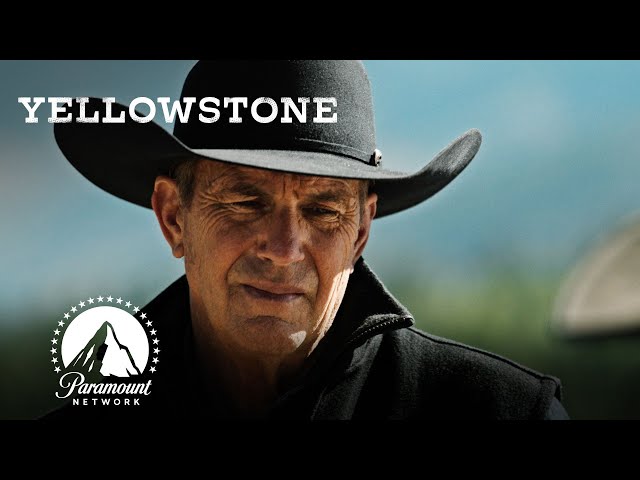
There’s recently been a lot of discussion and debate about the tv series Yellowstone, started by an article from RFD TV, about the language in the show.
People seemed evenly split on whether they watch the show or not based on the language and content of the show. But observations were made that when someone complained about the language in online discussions, it led to attacks against them by the people defending the language.
Reading through some of it, the most common comment I kept hearing about the language was that they were just words.
Thing is, many of the people on either side identify themselves as Christians and we do in fact need to be really careful that we understand the significance of words.
Why? Because of numerous verses across the Old and New Testaments of the Bible that tell us how important words are.
One verse to start with is this:
Ephesians 4:29 Do not let any unwholesome talk come out of your mouths, but only what is helpful for building others up according to their needs, that it may benefit those who listen.
It makes it clear that language that isn’t wholesome shouldn’t be spoken. Instead, it directs us to speak words that would work toward making life better for another person. The words we speak should only do good.
Look at just a few ways Proverbs shows us the importance of good words.
Proverbs 16:24 “Kind words are like honey–sweet to the soul and healthy for the body.”
Proverbs 15:4 “Gentle words bring life and health; a deceitful tongue crushes the spirit.”
Proverbs 18:4 “A person’s words can be life-giving water; words of true wisdom are as refreshing as a bubbling brook.”
Proverbs 20:15 “Wise speech is rarer and more valuable than gold and rubies.”
But it gets even more serious in the Book of James which has much to say about words and the importance of controlling our speech because of what it is capable.
James 3:6 The tongue also is a fire, a world of evil among the parts of the body. It corrupts the whole body, sets the whole course of one’s life on fire, and is itself set on fire by hell.
In this verse specifically, James warns us that we can be completely corrupted by our tongue, the words we speak. He describes our tongue as a fire and that we can basically release hell on earth through what we say to people.
Throughout the whole chapter, James warns us that we can speak terrible things and do great harm or we can use words to bring life to others. The most important words we can speak are the words that describe the gospel and how to find a saving faith in Jesus Christ.
This is why it’s important not to downplay the words we speak and the words we listen to. They can influence for good, the gospel and Jesus, or they can influence for evil.
The words we speak aren’t, ‘just words.’
by admin | Nov 4, 2021 | Behind the Bucking Chutes
By Scott Hilgendorff / Cowboys of the Cross
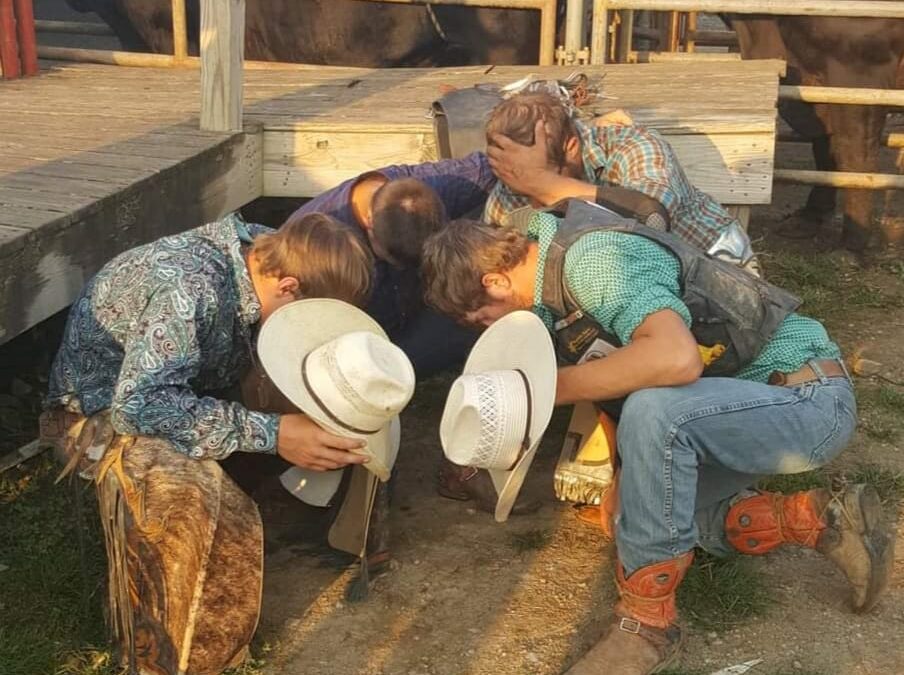
I choose love.
Not words you look to hear from a cowboy with a reputation of toughness to uphold. But that’s not the love I’m talking about. I choose this love.
John 13:34 A new command I give you: Love one another. As I have loved you, so you must love one another.
Jesus loved me enough to die for me and take the punishment meant for my sins. All I have to do is believe, repent and ask to be forgiven and thanks to his love, I can have an eternal and perfect life in Heaven. His love was an action, not a feeling.
I choose love.
It’s a command from Jesus but in a world where we’re divided, fighting with and hating on each other, does he really need to command me?
I choose love. I choose to say, “Hey buddy, I know you barely scraped your fees together tonight to get jerked down like that. I’ve got some extra, let me buy your Taco Bell.”
I choose love. I choose to hold my tongue when the waitress just gave me attitude and instead, ask how I can pray for her when the check comes.
I choose love. I choose to spend some time coaching a gunsel instead of giving up on him or just laughing when he walks by with his spurs upside down and his chaps on an hour and a half before showtime.
I choose love. I choose to cheer for my rival who is about to win the team roping championship after my horse walked through barbwire this morning.
I choose love. I choose to stop by the hospital and check on the guy who got stomped even though he sucker-punched my traveling partner last week for talking to his girl a little too much after the rodeo.
I choose love. I choose to pray for you even though you may never know I’m doing it. I choose to tell others what is good about you or keep my mouth shut. I choose to help you without you knowing it isn’t convenient.
Do I blow it sometimes? Absolutely. Do I repent and apologize or make amends? I try to. Can I do better? Yep. Grace lets me mess it up but Jesus’s love motivates me to do better. I choose that love. I don’t have to like you to love you. You don’t have to like me for me to love you. This love is action and it’s a lot harder than hate or anger. It takes sacrifice, it takes time. It takes putting someone else first. I choose to do what’s hard. I choose to walk into the stampede of anger.
I choose love.

by admin | Nov 4, 2021 | Strengthening Your Grip
By Jesse Horton / Cowboys of the Cross
“How do we define true faith in Jesus?” From John 14:1-14 we can determine that true faith in Jesus is a gift from God, the receipt of which is confirmed by deep contemplation upon the words and signs of Jesus.
However, this is only the beginning of faith. Faith in Jesus is more than believing the right things; it’s living the right way because you believe the right things. True biblical faith is something that we live out. It reshapes and rearranges our lives. It’s more than just an intellectual ascent to doctrines and beliefs because it shows up in how we live and respond to the world.
Josh, Cowboys of the Cross’s ranch hand, has spent the last year teaching through a video series on this site about what it looks like to live out our faith. The series will continue for a few more months.
But consider Hebrews 11:1-12.
1 Now faith is the assurance of things hoped for, the conviction of things not seen. 2 For by it the people of old received their commendation. 3 By faith we understand that the universe was created by the word of God, so that what is seen was not made out of things that are visible.
4 By faith Abel offered to God a more acceptable sacrifice than Cain, through which he was commended as righteous, God commending him by accepting his gifts. And through his faith, though he died, he still speaks. 5 By faith Enoch was taken up so that he should not see death, and he was not found, because God had taken him. Now before he was taken he was commended as having pleased God. 6 And without faith it is impossible to please him, for whoever would draw near to God must believe that he exists and that he rewards those who seek him. 7 By faith Noah, being warned by God concerning events as yet unseen, in reverent fear constructed an ark for the saving of his household. By this he condemned the world and became an heir of the righteousness that comes by faith.
8 By faith Abraham obeyed when he was called to go out to a place that he was to receive as an inheritance. And he went out, not knowing where he was going. 9 By faith he went to live in the land of promise, as in a foreign land, living in tents with Isaac and Jacob, heirs with him of the same promise. 10 For he was looking forward to the city that has foundations, whose designer and builder is God. 11 By faith Sarah herself received power to conceive, even when she was past the age, since she considered him faithful who had promised. 12 Therefore from one man, and him as good as dead, were born descendants as many as the stars of heaven and as many as the innumerable grains of sand by the seashore.
Notice that the author of Hebrews doesn’t tell us what these people believed as evidence of their faith. Instead, he tells us what their faith caused them to do and the results of their doing. Abel worshiped God through sacrifice, giving his first and best to God, and was commended as righteous; biblical faith captures the worship of your heart. Enoch pleased God with his obedient walk and did not see death; biblical faith causes us to remain loyal to God in all that we say and do. Noah submitted to his calling from God and became an heir of the righteousness that comes by faith; biblical faith causes us to submit our lives to the call of God. Abraham obeyed God not only when he was told to leave his homeland, but he also obeyed when commanded to sacrifice his only son, Isaac, to God (Heb. 11:17-20); biblical faith generates radical obedience to God.
Worship, loyalty, calling, and radical obedience – these are collectively the evidence of our faith. How much worship does God want from us? All of it, without division or competition, and only the first and best we have will do. What type of loyalty does God want? A loyalty that never fades and does not turn to the left or to the right but seeks always to be near him and in the goodness of his mercy and grace.
What shapes the calling – the purpose – of our lives? Only God; any other calling we answer will be temporary and fruitless compared to the eternal things God has given us. How do we obey the commands of God? Think of the discipline it takes to train a horse. Think of the effort that has to go into training if you want to be a world champion team roper or bull rider. Obeying God’s commands requires a commitment even bigger than that. We obey God’s commands wholeheartedly, unreservedly, and with such intense focus that partial obedience or disobedience is unthinkable and unacceptable. When God says, “build an ark” or “go make disciples of all nations,” a “good enough” attitude is insufficient; there are no excuses; only our best effort will do because that is what faith in Jesus produces in us as we are conformed into his image: worship, loyalty, calling, and radical obedience.

by admin | Oct 21, 2021 | Behind the Bucking Chutes
By Scott Hilgendorff / Cowboys of the Cross
Draw a picture of a horse. Mine will look more like a stick horse unless I have something in front of me to draw from, then it will get a little better. The next person will draw a picture with amazing shading and detail. Another will use unrealistic colors to create their own style. The next will ask, “What kind of horse?” And another will draw the horse and include a barn setting for a background.
Romans 12:4-8 For just as each of us has one body with many members, and these members do not all have the same function, 5 so in Christ we, though many, form one body, and each member belongs to all the others. 6 We have different gifts, according to the grace given to each of us. If your gift is prophesying, then prophesy in accordance with your faith; 7 if it is serving, then serve; if it is teaching, then teach; 8 if it is to encourage, then give encouragement; if it is giving, then give generously; if it is to lead, do it diligently; if it is to show mercy, do it cheerfully.
We all have a couple common tasks that Jesus gave us: to love others and to share the gospel and make disciples.
Through looking at scriptures about what Jesus did in his time here, we can get some idea of how he approached and treated others and we can pull from that just how it is that we’re supposed to carry out those tasks. But we also know that each of us has been given different gifts from God.
Just like how our task to draw a horse will be completed differently, how we love others or how we connect with them or even the methods we use to share the gospel will be different. But the result will be the same. A horse will be drawn. The gospel will be shared. In these few verses from Romans, it’s also made clear we’re to use the gifts we have to the best of our ability. My stick horse might be the best I can do but the horse will still get drawn. I can still take care to draw each line as straight and smoothly as I can.
But Jesus isn’t telling us to draw a horse or do something that doesn’t use skills God has given us. He’s telling us we all have different gifts and gives us examples like showing hospitality or mercy. You may not feel like you’re the best communicator, but you can still explain the gospel to a friend in the best way you know how to share it. A person whose gift is teaching may have an easier time of explaining the gospel to someone but it may be the kindness you show through your gift of hospitality that may be what God uses to make it easier for that person to really listen to the gospel message.
by admin | Oct 21, 2021 | Strengthening Your Grip
By Jesse Horton / Cowboys of the Cross
I love how honest the authors of Scripture were. For starters, none of the fathers or leaders of Israel were portrayed as perfect examples of religious leaders. Abraham’s failure to trust God was recorded three different times (Gen. 12:10-13; 16:1-4; 20:1-3). Moses failed to trust and honor God with his obedience at Meribah, losing the opportunity to lead Israel into the Promised Land (Num. 20:12) and to enter it himself (Deut. 1:37). King David was an adulterer, a murder (2 Sam. 11), and a passive father (2 Sam. 13). Jacob (later renamed Israel) was a conman (Gen. 27:1-40). Joseph was a braggart (Gen. 37:1-11). The examples go on and on, even in the New Testament.
The Scriptures of true Christian faith are set apart from the writings and teachings of all other religious sects in that they are blatantly honest about the shortcomings of the heroes of faith whom they portray without excusing or making light of their sins. The Scriptures do not promise us a squeaky-clean or easy and comfortable life in return for our faith. Even with strong faith, we will continue to sin, and we will continue to suffer simply because we live in a world that rejects and rebels against God.
Jesus assures us that if we follow him, we will be hated and persecuted (John 15:20). That’s precisely why John recorded in such great detail Jesus’s final words to his disciples in chapters 13-17 of his gospel message concerning Jesus. Jesus warns his disciples that they will be killed by those who think they are serving God (16:2), and that they will all be scattered (16:31). These aren’t the only things Jesus promised to his disciples, however. Over and over again, he reminds them of the grace he will provide for them throughout their most difficult trials. Jesus assures his followers that he will not leave them like a bunch of orphans (14:18), and he comforts them with the ongoing ministry of the Holy Spirit living in them (14:25ff).
Ultimately, the disciples’ reason – and ours – for hope is summed up in the final words of John 16: “I have said these things to you, that in me you may have peace. In the world you will have tribulation. But take heart; I have overcome the world” (33). The world is a tough place. Rodeo is a tough sport. Ranching is a tough lifestyle. It’s easy to think we can handle a lot but there will be times when rodeo and ranching feel easy and we feel like we do not have what it takes to deal with everything else we’re facing.
There will be times when we feel like we’ve been singled out to endure particular difficulties. There will be times when we face regret for our past and fear for our future. Yet, in spite of all these things, you and I have a real reason for peace and hope. It’s not the peace that comes when everything in life is going as we think it should, when the people around us respond the way we want to us and our desires, or when our health and finances are good.
There is a firmer foundation for peace found only in knowing that our heavenly Father is not afraid of, nor will he be defeated by the things that make us afraid or defeat us. Peace comes when we rest in the fact that by grace we are connected to the One who has overcome everything that might cause our hearts to faint, and nothing can sever that connection.
Romans 8:31-39
31 What, then, shall we say in response to these things? If God is for us, who can be against us? 32 He who did not spare his own Son, but gave him up for us all—how will he not also, along with him, graciously give us all things? 33 Who will bring any charge against those whom God has chosen? It is God who justifies. 34 Who then is the one who condemns? No one. Christ Jesus who died—more than that, who was raised to life—is at the right hand of God and is also interceding for us. 35 Who shall separate us from the love of Christ? Shall trouble or hardship or persecution or famine or nakedness or danger or sword? 36 As it is written:
“For your sake we face death all day long;
we are considered as sheep to be slaughtered.”
37 No, in all these things we are more than conquerors through him who loved us. 38 For I am convinced that neither death nor life, neither angels nor demons, neither the present nor the future, nor any powers, 39 neither height nor depth, nor anything else in all creation, will be able to separate us from the love of God that is in Christ Jesus our Lord.

Recent Comments