
by admin | Sep 23, 2021 | Strengthening Your Grip
By Jesse Horton / Cowboys of the Cross
We all want to hear from God. We want to know that he exists, that he loves us, and we want to know what he has planned for us and what he wants from us. We know from these messages over the past several weeks that God speaks to us primarily through the Scriptures, but that he also speaks to us through prayer and other people (especially other believers). We finish our discussion of communicating with God by noting how God communicates with us through circumstances and through the ministry of the Holy Spirit.
Throughout Israel’s history, God has communicated through circumstances that he is with his people. He has confirmed his power and his leading by sovereignly arranging the world he created to speak to his people who are listening closely for his still, small voice. God spoke to Jacob and Joseph through dreams (Genesis 28:10-17; 37:5-8). Joseph and Daniel even interpreted the dreams of others to lead God’s people and prove God’s sovereign power by foretelling future events (Genesis 40:1-41:36; Daniel 2:1-45). Abraham’s servant had Rebekah confirmed as Isaac’s future wife when God led both the prayerful petition of Abraham’s servant and the generous actions of Rebekah (Genesis 24:1-28). There are countless other times throughout both the Old and New Testaments where God directed his people and confirmed his will both through miraculous and mundane circumstances. The key to our ability to hear God’s voice in these things is our relationship with God. Apart from the disciplines of Bible study and prayer in humbly seeking a relationship with God, he could part seas and raise the dead (as he did with Moses/Pharaoh and Lazarus, Jesus/Pharisees) and we will still not hear what he’s trying to tell us. We all need to ask this question: Am I placing myself in a posture and position to hear from God?
It’s equally important to remember that followers of Jesus live in a world that actively rejects and fights against them. Therefore, some of the affirmations we receive will be hostility and opposition. Jesus reminded his disciples that because he chose us out of the world, the world hates them (John 15:19). That same world decided that Jesus was a threat to their self-importance and autonomy, and that Jesus needed to be killed for them to keep that which they believed to be most valuable to them. When we follow Jesus – truly follow Jesus – we can expect the same opposition. Unfavorable circumstances that are the direct result of faithfulness to God are often a confirmation that we are where God wants us – standing in the place of Jesus.
Another way we hear from God is through his Holy Spirit. The Holy Spirit is the third person of the Triune God, (God, Jesus and the Holy Spirit). He is not some elemental force or feeling. He is a person. He can be grieved (Ephesians 4:30). He can be quenched (denied the right to do the work he intends to do) (1 Thessalonians 5:19). If our bodies are the Temple of God because of the indwelling Holy Spirit (1 Corinthians 6:19), then the Holy Spirit is God.
Jesus tells us what the work of the Holy Spirit is in John 14:15-17, 25-26 and 15:26-16:15 (please stop and read these verses carefully now). Here, we learn that the Holy Spirit is God in us, just as Jesus was God with us. Like Jesus then, the Holy Spirit has a mission that includes revealing the Father, redeeming us from sin, leading us to worship him in Spirit and truth, and equipping us to join in God’s mission to the world. Therefore, the work of the Holy Spirit will be all and only that which is consistent with the mission of the Father and the Son.
Because Jesus is the ultimate and final revelation of God (Hebrews 1:1-14), the Holy Spirit does not reveal new things to us, but instead brings greater clarity to the full revelation Jesus has already provided. He did this for the disciples by causing them to remember things he said and did and to view those things in light of his death and resurrection. That is why their witness about who Jesus is remains the most uniquely authoritative Christology in existence. No one else who has ever existed can both possess the Holy Spirit and remember all that Jesus has said to them. The Holy Spirit-enabled Apostolic witness of Jesus is the final witness of Jesus. Any teaching contrary to their witness is heresy.
The Holy Spirit is also at work through us to redeem the lost world back to God. He does that through a ministry of conviction. He convicts us of our sin to demonstrate our need for the Savior. He convicts us of our insufficient self-righteousness. We all think we’re “good people,” but our definition of what is good falls short; our definition of righteousness misses the true mark of God’s holiness. What we call “righteousness” is nothing more than filthy rags to God (Isaiah 64:6). Finally, the Holy Spirit convicts us regarding judgment. Because Jesus’ resurrection proves his claim to be Messiah, Son of God we are assured that his judgment is true. Jesus is victorious; Satan – the ruler of this world – is defeated…and so are all who continue to be a part of this world by rejecting Jesus as their Savior, Lord, and God.
So, as the Holy Spirit fills-out our understanding of the revelation of the Father through Jesus Christ, and as he convicts us and the world concerning sin, “righteousness,” and judgment, we need to remember this very important thing: the Holy Spirit will always be consistent with the Scriptures. For that matter, any communication that is not consistent with the Scriptures we can immediately and confidently reject as not from God. God won’t tell you it’s okay to have sex before marriage. God won’t tell you it’s fine to take out loans you know you can’t repay. God won’t reveal to you that the original Apostles had it all wrong and that Jesus was a created being or being from another planet. Revelation from God is always consistent with the Scriptures.
This week as you read your Bibles and pray, be still. Be quiet. Assume a humble posture that is prepared to hear from God and to act on his word. Listen and look for God’s communication to you through people, circumstances, and the Holy Spirit. All of these should be leading you to a better understanding of who Jesus is and encouraging and equipping you to be involved in God’s mission of revelation and redemption. We all have our part to play. You are the Temple of God. Go out and reveal him to the world.
by admin | Sep 23, 2021 | Behind the Bucking Chutes
By Scott Hilgendorff / Cowboys of the Cross
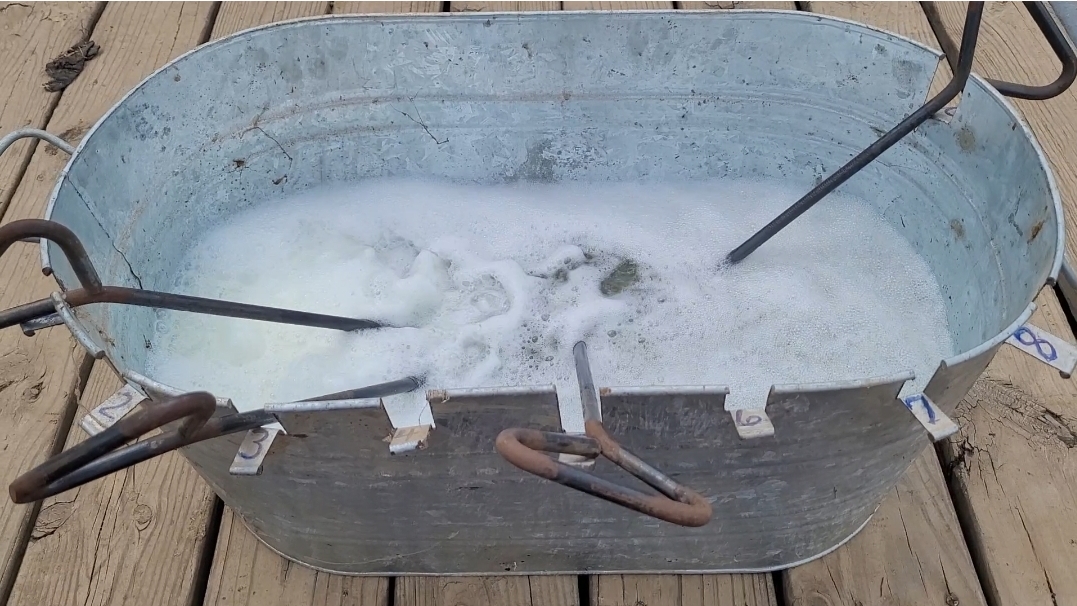
Next to me was a metal tub roiling with a mixture of gasoline and dry ice. Set inside were several numerical brands being super-cooled for the process of cold branding bulls. The process causes their hair to fall out and then grow back with the pigment forever changed to white.
It’s thought to be a less painful form of branding verses hot branding that scars the hide to make the brand.
I was waiting for everyone to gather together for a cowboy church message as the tub was boiling away and it got me thinking about the guys that actually will shape a coat hanger into a brand, heat it in a campfire and brand themselves.
While it’s not an extremely common practice, it’s certainly tied most closely to the cowboy and rodeo communities and it becomes a pretty clear way to show to the world around you that you’re a cowboy.
When we become Christians, followers of Christ whose lives are changed by a saving faith in Jesus, we’re permanently changed by that experience the way the bulls’ hair was going to be permanently changed by that cold branding.
But there’s no outward mark on our bodies that shows we have been changed and while a brand shows what cattleman a herd belongs to, there’s no outward physical change that shows we now belong to Jesus.
John 10:28 I give them eternal life, and they will never perish, and no one will snatch them out of my hand.
In this chapter of John, Jesus is describing us as sheep belonging to him and that no one can take us from him. We belong to him.
There is no need for us to be marked for Jesus to have to prove to anyone that we are his and that no one can take away the eternity Jesus bought for us with his death on the cross.
But, we still can’t help but outwardly show in other ways that we belong to Jesus. The Bible refers to that is fruit—the words and actions we carry out because of how much our salvation means to us and is changing us.
Matthew 7:16-18 By their fruit you will recognize them. Do people pick grapes from thornbushes, or figs from thistles? 17 Likewise, every good tree bears good fruit, but a bad tree bears bad fruit. 18 A good tree cannot bear bad fruit, and a bad tree cannot bear good fruit.
Jesus is warning here against false teachers, letting us know that we can tell who they are but the fruit they produce. Bad will come about from a false teacher but those who belong to Jesus are going to produce good fruit. Sure, Jesus may not have put a brand on our arm to show we belong to him but we won’t be able to hide it either through our words and actions, especially if we carry out his commands to tell others about him and to love others the way he loves us.
by admin | Sep 9, 2021 | Behind the Bucking Chutes
By Scott Hilgendorff / Cowboys of the Cross
It can become hard to serve others when your services makes them feel like they have to return the favor. The best advice I ever received about being able to serve others in our culture is to actually ask them to serve you first.
It sounds like it goes against what the Bible teaches but here’s what happens: if I’m the new guy in the neighborhood and I try to do something for my neighbors as a way to serve them and get to know them, we unintentionally put them in the position of needing to return the favor; they owe us.
Buuuuut, if you ask THEM to help YOU first, you are now in the position of owing them a favor and unless they are just horribly unfriendly people, most are going to be willing to help you when you ask. You still get to know them, a relationship with the neighbor can start and it will be easier to serve them when opportunities arise.
My friends that explained this to me had this happen with a new family that moved in the neighborhood. I don’t remember the details but they had an opportunity to just jump in and help the family with something fairly significant but after that, found the couple was avoiding them. It wasn’t until my friends tried asking them for help that they all then started talking freely across the street and my friends realized they were being avoided because the couple felt they were in debt for the help and felt awkward.
I’m still the new person on the mountain and have a handful of neighbors where I live near Gatlinburg. One of the couples are descendants of the original family that settled the mountain and eventually sold portions of it that have become a handful of homes and rental cabins that make up our little mountain neighborhood.
When I first got up there, I did a terrible job of meeting more than the closest neighbor who sits a bit behind and above me on the ridge we share.
For awhile, we were mostly just “hey neighbors” or “wave as you go by neighbors” so for the ones I waved “hey” to the most, I decided to bake some cookies as we got close to Christmas two years ago. It’s the only time I do something like that, making shortbread like my mom had made when I was little. I had put plates of them in three neighbor’s mailboxes with Christmas cards and a note with my contact information to sort of introduce myself.
One never said anything, another put a bunch of candy canes back in mine and another didn’t find theirs until a bear had knocked the mail box over that next summer because I put them in a long-since gone relative’s box by mistake. I got a panicked voicemail from the neighbor feeling terrible that they had never acknowledged the gift, not even knowing what it was that the bear had eaten. She apologized repeatedly when I called her back because she felt terrible and I ended up feeling terrible because it had made her feel like she was in an awkward spot.
So I tried the advice I had overlooked the first time around by dropping off cookies. With the neighbor closest to me I had an extended road trip that was taking me away for more than a few weeks and I was able to meet him by actually going over to ask him if I could get him to cut my lawn once while I was away. I offered to pay but he refused.
Perfect. I now owed him.
We have visited multiple times now since then and I’ve been able to help him pile wood with no sense of obligation anymore. We now are both comfortable asking for help if we need it.
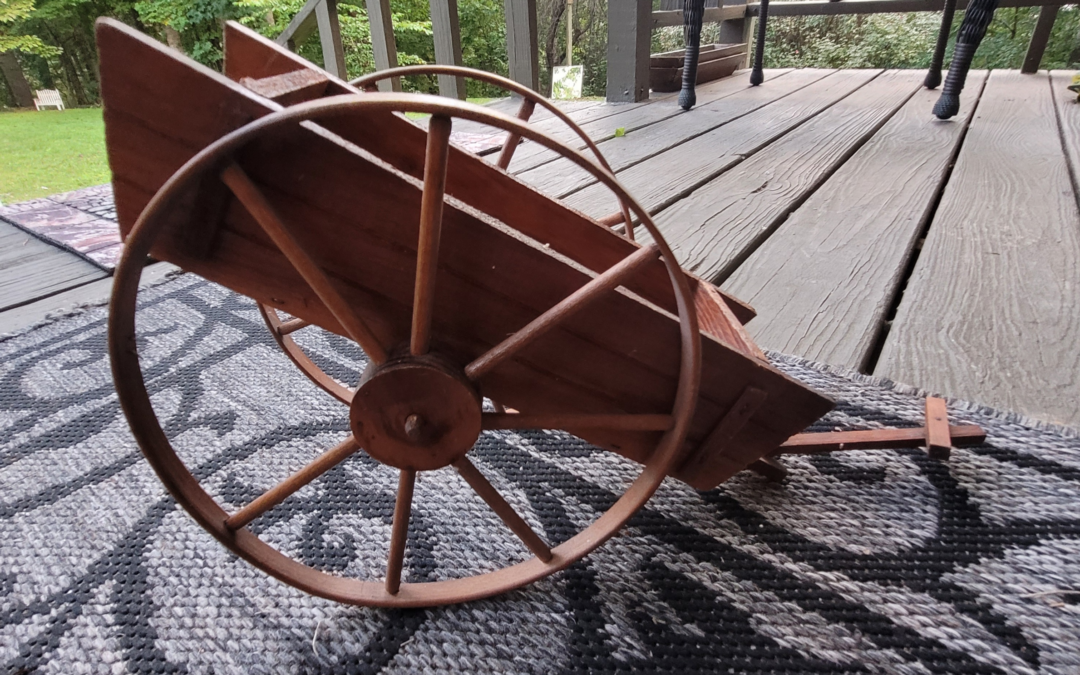
But there was still that problem with the original mountain family. That wonderful old-timey culture is deeply rooted. The phone call about the Christmas card found months later at least opened the door for me to drop in the next time I saw them outside. Caught unprepared, the wife excused herself, went inside and came out with a jar of apple butter she had made back in the fall. I had created this need for her to give back. So after a trip home to visit family in Ontario, I came the next time with a box of cookies you can only get in Canada. Because I had expressed interest in it during our conversation, I left with the moon-phase guide to planting a garden they kept on their refrigerator. Next time, having learned she couldn’t eat much sugar, I came with some chips in a style you can only get in Canada and left with a wooden wagon planter from her porch.
Finally, a couple weeks ago, I was getting ready for another trip to Ohio and Ontario when my covid test for the border crossing came back inconclusive and I was going to have to go to town again to take another test. At the same time, my lawn tractor backfired and died on me right as the husband was driving by on his own to cut the lawns on the two rental cabins down from me. I really did need some help and was able to approach him to ask if he had enough gas and time to keep cutting one more while I ran back to town for the second test.
He wouldn’t accept offer of payment and also said he’d help figure out what was wrong with the mower when I get back.
My hope is that by finding myself in real need of help, this has broken the cycle of gift-giving and opened the door to where they won’t mind asking me for help or that I can pitch in when I see a need without having to be given something off their porch.
Philippians 2:3-4 Do nothing out of selfish ambition or vain conceit. Rather, in humility value others above yourselves, 4 not looking to your own interests but each of you to the interests of the others.
The idea of asking for help instead of offering it seems contrary to scripture except it can be an effective way to build a bridge that opens the door to more easily serve those neighbors and develop a closer relationship that allows the gospel to be shared.
Rodeo and bull riding give us all a great opportunity to ask for help and I think in that environment, it’s easier for us to do it either way. If we need help, we’re going to ask for it and if we see someone who needs help, most of us are pretty good at stepping up and helping without being asked. It’s just a natural way of doing things so it doesn’t create that sense of obligation.
But what are some ways we can either serve or ask to be helped in order to build connections with others around us outside the sport? We help others so we can show Jesus to them but however we do it, we need to build connections so we can also tell them who Jesus is and what he did for them.

by admin | Aug 26, 2021 | Behind the Bucking Chutes
By Scott Hilgendorff / Cowboys of the Cross
1 Peter 3:8 Finally, all of you must live in harmony, be sympathetic, love as brothers, and be compassionate and humble. 9 do not repay evil with evil…
Reasons to be angry seem to be coming at us from every direction. As believers, we are instructed to live very differently from the would around us.
To live in harmony is the opposite of what a lot of us see in social media where we share our anger and add fuel to the flames of disunity instead of inviting someone to sit down and warm themselves by our campfire.
To be sympathetic would be to try to understand another person’s hurt and anger no matter how much we disagree with their reasons to feeling that way.
Loving as brothers is in action. Just like we would loan our rival in sudden need a bull rope or even a horse to mount, we are tasked to do good toward others who might even hate us.
To be compassionate and humble is to reach out help others who are nothing like us.
To be or carry out all of those actions and attitudes in the list isn’t just as simple as those illustrations but it gives us a place to start as we work to understand as Christians, we’re called to be different from the unbelieving world.
But wait, it gets even harder.
The second half of this chapter touches on being different from the world around us but it focuses on how being different can lead to suffering.
Jesus suffered on the cross on our behalf, taking the punishment meant for our sin. He did this so that by believing he was the son of God and did this for us, that if we would repent of our sin and ask to be forgiven, we could be saved from God’s wrath and instead have a perfect eternity in Heaven.
1 Peter 3:13-14 Who is going to harm you if you are eager to do good? 14 But even if you should suffer for what is right, you are blessed. “Do not fear their threats; do not be frightened.”
Because of what Jesus did for us, we should have a desire to do good. We may be all out feuding with someone at the rodeo but when we help them change out the flat tire on their stock trailer, they might have been the one that did it at the rodeo last weekend but this time, they aren’t likely to turn around and slash the tires on our truck. But take this as far as it can go, there are missionaries preaching the gospel in other countries who have been tortured and killed for preaching from the Bible. One of the worst things that could happen to us in North America so far could be a situation where a rodeo announcer loses a gig because the producer doesn’t want him doing an opening prayer or praying in Jesus’s name. Meanwhile there are Christians in Afghanistan facing an uncertain future in a culture that was already dangerous to begin with.
It’s hard for us to get our heads around it but the reality is, those who have lost their lives for their faith have gone on to their perfect life in Heaven while we’re still here in the sinful and broken world. Those who have suffered in other ways have Heaven to look forward to.
So what’s holding you back? Do good.
by admin | Aug 26, 2021 | Strengthening Your Grip
By Jesse Horton / Cowboys of the Cross
We’ve recently been studying the topic of how God communicates to us. We all want to know what God’s will for our lives is, but most of us are unsure how to determine what that is or if God will even communicate that to us. Let me assure you, God wants you to know him, and as you know him personally and intimately, his will for your life will become increasingly clear.
We’ve established that the primary way God speaks to us is through our study of and meditation on the Scriptures, and that the secondary way God speaks to us is through prayer. We conclude our examination of Jesus’s model prayer – called The Lord’s Prayer – today.
For yours is the kingdom, and the power, and the glory forever and ever. Amen.
This has given me such great comfort and perspective in my life over the past year or so. Why? Because it is so easy for me (and probably for you too!) to let my prayers be focused on either my needs or the needs of others. Someone is sick; we pray for them to get better. Someone is injured at the rodeo; we pray for their healing. Someone lost their job; we pray for them to find another one quickly. But couldn’t God be using some of these circumstances to achieve a more perfect faith for those affected? A person may be laid out in a hospital bed and on the couch for a few months, but God can bring about a lot of changes in that person’s life in that time. Jesus’s prayer began with an acknowledgment of the holiness of God and then moved on to the first request Jesus said we should make to God. Do you remember what it was? Your kingdom come. Your will be done on earth as it is in heaven.
Let’s be honest. In my sinful, fallen, self-centered existence, I want to establish my own kingdom where I am sovereign, and everything works together for my personal definition of what is best…and you’re just like me because you’re a sinner too! The first request Jesus taught his disciples to make was that God’s kingdom would invade and overtake our world, which presently is the kingdom of Satan because Adam and Eve traded obedience to God for the lies of the devil. Now, at the end of this model prayer, Jesus teaches us to remind ourselves that everything we ask is in submission to God’s perfect kingdom rule.
Now by grace, we can set aside our selfish ambitions and welcome God’s kingdom rule in our lives, but Jesus didn’t call us to sit on the sidelines and wait for that to happen. He’s called us to be his ambassadors – to represent his kingdom in this kingdom! We have an active role in bringing God’s kingdom to earth. I don’t know about you, but that seems to me to be a huge task, the weight of which I am certainly unable to bear! But Jesus teaches us to remind ourselves that the power is God’s! That’s one of the most comforting truths about being Jesus’s disciples – everything he requires of us he accomplishes through his own power! It’s just like in Luke 5:4-11. Jesus asked Peter, a professional fisherman, to push out into the water and let his net down for a catch. But Peter had been fishing all night and caught nothing. Nevertheless, Peter chose to obey Jesus, and as a result they caught so many fish that two boats nearly sank trying to haul them in! When God asks us to do something, our part is obedience, and when we obey the results are in his hands.
Finally, Jesus’s model prayer reminds us that all we do, all we say, and all we pray should have as the core purpose God’s eternal glory. In Luke 6:40, Jesus teaches that “everyone when he is fully trained will be like his teacher.” As Jesus’s disciples, we are to be learning and training to love as he loved, serve as he served, and suffer as he suffered. And remember, he did it all with a purpose: “I glorified you on earth, having accomplished the work that you gave me to do” (John 17:4). Just as Jesus’s earthly life served the purpose of giving God glory, our lives should do the same, and our prayers should reflect that purpose.
Now that we’ve completed our examination of The Lord’s Prayer, I want to break it down into an easy-to-remember acrostic that will help you pray as Jesus taught us without having to say the same words he said. After all, he didn’t say, “Pray these words.” He said, “Pray in this manner.”
PRAY
Praise – Jesus began his prayer by honoring the holiness of the name of God. God is your daddy who loves you faithfully even when you are unfaithful and rebellious. He is your provider, freely giving you all good things by his grace. Spend some time praising God for who he is.
Repent – The word repent means to turn around or turn away from one thing and toward another. Jesus’s prayer reminds us to repent of the desire for our own wills to be done and our own kingdoms to be established, and instead to submit to God’s will and his kingdom.
Ask – Jesus taught us to ask for daily provision (we do not live independently from God), forgiveness for our sin and a forgiving spirit toward others, and protection from temptation, sin, and the schemes of the devil. With the Father’s glory in mind, we ask for God to meet our needs and the needs of others especially in these three areas which have eternal consequences.
Yield – It’s all about God’s kingdom, God’s power, and for God’s eternal glory. Bookending your prayers with these reminders is a great way to make sure your prayers stay focused on these and do not slip into the self-centered me-ism of praying to God like he is a genie in a bottle who exists to do your bidding.
Now, may the grace of prayer to our loving Father strengthen and sustain you as you seek his will and his glory.

Recent Comments