
by admin | Jan 27, 2022 | Behind the Bucking Chutes
By Scott Hilgendorff / Cowboys of the Cross
Only few will find it.
“Enter through the narrow gate. For wide is the gate and broad is the road that leads to destruction, and many enter through it. 14 But small is the gate and narrow the road that leads to life, and only a few find it.” Matthew 7:13-14
When most everyone we know in rodeo and bull riding identifies as a Christian, how is it possible then that only a few will find their way to Heaven?
What Jesus is saying is that a lot of us really don’t know him in the sense that we’ve experienced a real relationship with him where we’ve truly believed in him, his death for us and his resurrection and truly repented of our sin and asked for forgiveness. And if we don’t have a genuine relationship with Jesus, he’ll also say he doesn’t know us.
Matthew 7:22-23 On that day many will say to me, ‘Lord, Lord, did we not prophesy in your name, and cast out demons in your name, and do many mighty works in your name?’ 23 And then will I declare to them, ‘I never knew you; depart from me, you workers of lawlessness.’
Whether we do what look like great things or commit terrible sins, those actions don’t give us or destroy a relationship with Jesus, only belief in him, true repentance, confession of our sin and asking to be forgiven can save us. The good we do becomes evidence of our saving faith in Jesus.
Most of us believe a mixture of ideas of what a Christian is, but those ideas aren’t the gospel that God uses to save them. That also means that many of us care so little about our faith that we’re not seeing this potentially soul-saving post. That’s because nothing in us has been changed by Jesus to drive us toward learning more about him and God’s word to us in the Bible.
While we don’t profess to be the best teachers, too many people are not reading their own Bibles and not seeking knowledge from other teachers, whether it be this ministry or anywhere else. That breaks our hearts because we want everyone to experience a real, saving, life-changing relationship with Jesus. In rodeo and bull riding, we’re a family, and because you’re family, we love you and want you to understand the gospel of Jesus Christ. But we know the truth of Jesus’s words and for those verses above to be true, most of the people needing to hear this have scrolled on past and the ones reading it are the ones we’re already blessed to get to know and serve through this ministry

by admin | Dec 12, 2021 | Behind the Bucking Chutes
By Scott Hilgendorff / Cowboys of the Cross
From nativity scenes to Christmas specials, we have the idea that the three wise men, or Magi, were there with the shepherds to see the baby Jesus in the stable.
Scripture tells us something different.
These men, called magi, were likely priests from an eastern culture like Persia, led by what appeared to be a star, to see the king they had heard about.
King Herod, like most, did not fully understand that Jesus was not here to replace his rule, but for a much greater purpose that would pave the way for all to be able to find salvation through his eventual death on a cross. He asked the Magi to report back to him the location of this king, lying about his intent to have the baby killed.
The Magi were warned in a dream to not return to Herod who was left without the location of Jesus.
Instead, what we have is a very grim part of the Christmas story in which Herod then ordered all children two years or younger to be killed.
Matthew 2:16 When Herod realized that he had been outwitted by the Magi, he was furious, and he gave orders to kill all the boys in Bethlehem and its vicinity who were two years old and under in accordance with the time he had learned from the Magi.
Verse 11 told us the ‘wise men’ arrived to see Jesus at a house, not a stable, and in this verse, we see it was as much as two years after Jesus was born.
Those who work in the rodeo and horse industries know how animal rights activists have extremely wrong ideas about the treatment of animals.
Much of their information is passed on from person to person and without digging in to learn from accurate information, they simply believe what they have been told, without question.
The lesson for us in this story about the wise men is the importance of taking our Biblical knowledge directly from scripture.
What we assume we know from what is passed on by others isn’t always true. It’s how most people generally overlook the fact that when we die, we don’t actually ‘get our wings’ or become angels.
Psalm 8:5 You have made them a little lower than the angels and crowned them with glory and honor.
The “them” being referred to in the Psalm is humans, while Genesis 1:25 describes the types of angels God created and 1 Corinthians 6:3 references people judging angels. The distinction is clear that people and angels are never the same.
Following these common misunderstandings about the Bible don’t cause harm to God’s plan for our salvation, but they show us the need to not just rely on what we think we know about the Bible, but to dig in for ourselves to all that God’s word has to offer us.
The Christmas story is a far more beautiful story when we understand it correctly and how it shows us just how much God loves us. We need to understand the story starts with the birth we are celebrating but it leads to Jesus’s death on the cross and resurrection so that through faith in who Jesus was and is and by asking to be forgiven of the sins that separate us from God, we can be given an eternal home with him in Heaven–not as angles but as the perfect creation God made us to be.
by admin | Nov 18, 2021 | Behind the Bucking Chutes
By Scott Hilgendorff / Cowboys of the Cross
“They’re just words.”
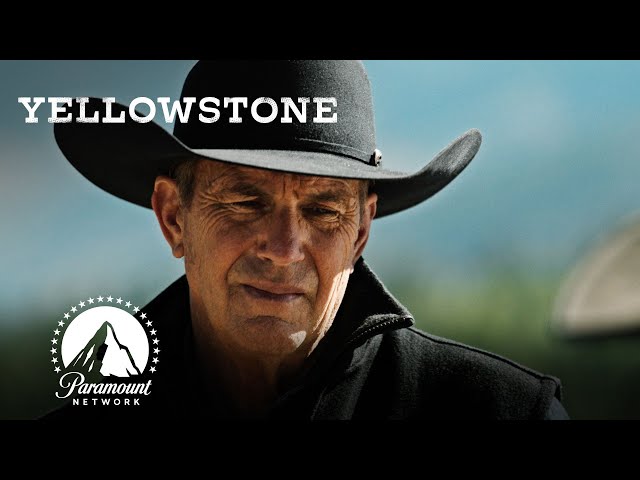
There’s recently been a lot of discussion and debate about the tv series Yellowstone, started by an article from RFD TV, about the language in the show.
People seemed evenly split on whether they watch the show or not based on the language and content of the show. But observations were made that when someone complained about the language in online discussions, it led to attacks against them by the people defending the language.
Reading through some of it, the most common comment I kept hearing about the language was that they were just words.
Thing is, many of the people on either side identify themselves as Christians and we do in fact need to be really careful that we understand the significance of words.
Why? Because of numerous verses across the Old and New Testaments of the Bible that tell us how important words are.
One verse to start with is this:
Ephesians 4:29 Do not let any unwholesome talk come out of your mouths, but only what is helpful for building others up according to their needs, that it may benefit those who listen.
It makes it clear that language that isn’t wholesome shouldn’t be spoken. Instead, it directs us to speak words that would work toward making life better for another person. The words we speak should only do good.
Look at just a few ways Proverbs shows us the importance of good words.
Proverbs 16:24 “Kind words are like honey–sweet to the soul and healthy for the body.”
Proverbs 15:4 “Gentle words bring life and health; a deceitful tongue crushes the spirit.”
Proverbs 18:4 “A person’s words can be life-giving water; words of true wisdom are as refreshing as a bubbling brook.”
Proverbs 20:15 “Wise speech is rarer and more valuable than gold and rubies.”
But it gets even more serious in the Book of James which has much to say about words and the importance of controlling our speech because of what it is capable.
James 3:6 The tongue also is a fire, a world of evil among the parts of the body. It corrupts the whole body, sets the whole course of one’s life on fire, and is itself set on fire by hell.
In this verse specifically, James warns us that we can be completely corrupted by our tongue, the words we speak. He describes our tongue as a fire and that we can basically release hell on earth through what we say to people.
Throughout the whole chapter, James warns us that we can speak terrible things and do great harm or we can use words to bring life to others. The most important words we can speak are the words that describe the gospel and how to find a saving faith in Jesus Christ.
This is why it’s important not to downplay the words we speak and the words we listen to. They can influence for good, the gospel and Jesus, or they can influence for evil.
The words we speak aren’t, ‘just words.’
by admin | Nov 4, 2021 | Behind the Bucking Chutes
By Scott Hilgendorff / Cowboys of the Cross
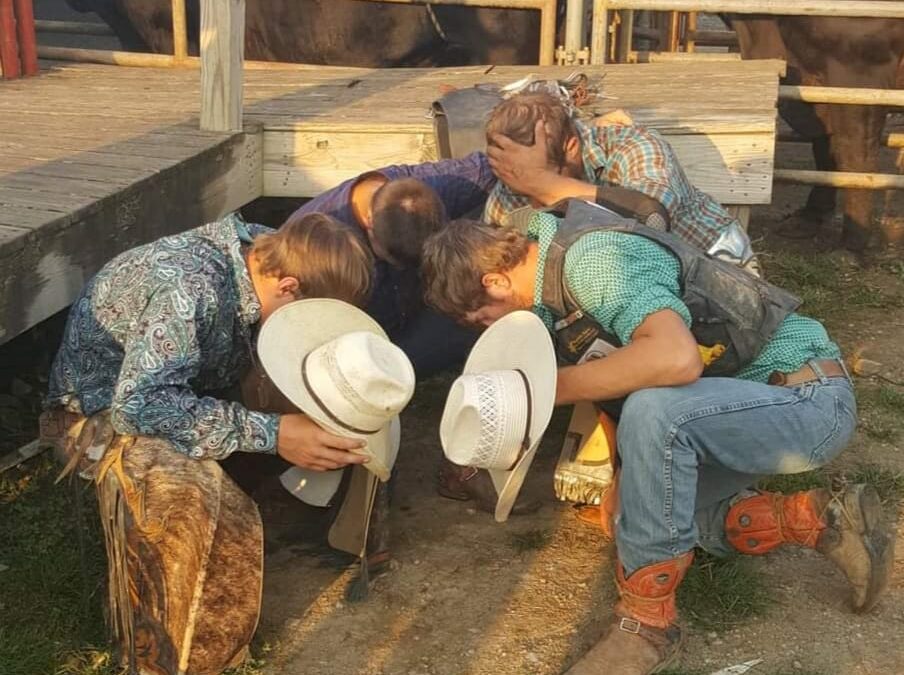
I choose love.
Not words you look to hear from a cowboy with a reputation of toughness to uphold. But that’s not the love I’m talking about. I choose this love.
John 13:34 A new command I give you: Love one another. As I have loved you, so you must love one another.
Jesus loved me enough to die for me and take the punishment meant for my sins. All I have to do is believe, repent and ask to be forgiven and thanks to his love, I can have an eternal and perfect life in Heaven. His love was an action, not a feeling.
I choose love.
It’s a command from Jesus but in a world where we’re divided, fighting with and hating on each other, does he really need to command me?
I choose love. I choose to say, “Hey buddy, I know you barely scraped your fees together tonight to get jerked down like that. I’ve got some extra, let me buy your Taco Bell.”
I choose love. I choose to hold my tongue when the waitress just gave me attitude and instead, ask how I can pray for her when the check comes.
I choose love. I choose to spend some time coaching a gunsel instead of giving up on him or just laughing when he walks by with his spurs upside down and his chaps on an hour and a half before showtime.
I choose love. I choose to cheer for my rival who is about to win the team roping championship after my horse walked through barbwire this morning.
I choose love. I choose to stop by the hospital and check on the guy who got stomped even though he sucker-punched my traveling partner last week for talking to his girl a little too much after the rodeo.
I choose love. I choose to pray for you even though you may never know I’m doing it. I choose to tell others what is good about you or keep my mouth shut. I choose to help you without you knowing it isn’t convenient.
Do I blow it sometimes? Absolutely. Do I repent and apologize or make amends? I try to. Can I do better? Yep. Grace lets me mess it up but Jesus’s love motivates me to do better. I choose that love. I don’t have to like you to love you. You don’t have to like me for me to love you. This love is action and it’s a lot harder than hate or anger. It takes sacrifice, it takes time. It takes putting someone else first. I choose to do what’s hard. I choose to walk into the stampede of anger.
I choose love.

by admin | Nov 4, 2021 | Strengthening Your Grip
By Jesse Horton / Cowboys of the Cross
“How do we define true faith in Jesus?” From John 14:1-14 we can determine that true faith in Jesus is a gift from God, the receipt of which is confirmed by deep contemplation upon the words and signs of Jesus.
However, this is only the beginning of faith. Faith in Jesus is more than believing the right things; it’s living the right way because you believe the right things. True biblical faith is something that we live out. It reshapes and rearranges our lives. It’s more than just an intellectual ascent to doctrines and beliefs because it shows up in how we live and respond to the world.
Josh, Cowboys of the Cross’s ranch hand, has spent the last year teaching through a video series on this site about what it looks like to live out our faith. The series will continue for a few more months.
But consider Hebrews 11:1-12.
1 Now faith is the assurance of things hoped for, the conviction of things not seen. 2 For by it the people of old received their commendation. 3 By faith we understand that the universe was created by the word of God, so that what is seen was not made out of things that are visible.
4 By faith Abel offered to God a more acceptable sacrifice than Cain, through which he was commended as righteous, God commending him by accepting his gifts. And through his faith, though he died, he still speaks. 5 By faith Enoch was taken up so that he should not see death, and he was not found, because God had taken him. Now before he was taken he was commended as having pleased God. 6 And without faith it is impossible to please him, for whoever would draw near to God must believe that he exists and that he rewards those who seek him. 7 By faith Noah, being warned by God concerning events as yet unseen, in reverent fear constructed an ark for the saving of his household. By this he condemned the world and became an heir of the righteousness that comes by faith.
8 By faith Abraham obeyed when he was called to go out to a place that he was to receive as an inheritance. And he went out, not knowing where he was going. 9 By faith he went to live in the land of promise, as in a foreign land, living in tents with Isaac and Jacob, heirs with him of the same promise. 10 For he was looking forward to the city that has foundations, whose designer and builder is God. 11 By faith Sarah herself received power to conceive, even when she was past the age, since she considered him faithful who had promised. 12 Therefore from one man, and him as good as dead, were born descendants as many as the stars of heaven and as many as the innumerable grains of sand by the seashore.
Notice that the author of Hebrews doesn’t tell us what these people believed as evidence of their faith. Instead, he tells us what their faith caused them to do and the results of their doing. Abel worshiped God through sacrifice, giving his first and best to God, and was commended as righteous; biblical faith captures the worship of your heart. Enoch pleased God with his obedient walk and did not see death; biblical faith causes us to remain loyal to God in all that we say and do. Noah submitted to his calling from God and became an heir of the righteousness that comes by faith; biblical faith causes us to submit our lives to the call of God. Abraham obeyed God not only when he was told to leave his homeland, but he also obeyed when commanded to sacrifice his only son, Isaac, to God (Heb. 11:17-20); biblical faith generates radical obedience to God.
Worship, loyalty, calling, and radical obedience – these are collectively the evidence of our faith. How much worship does God want from us? All of it, without division or competition, and only the first and best we have will do. What type of loyalty does God want? A loyalty that never fades and does not turn to the left or to the right but seeks always to be near him and in the goodness of his mercy and grace.
What shapes the calling – the purpose – of our lives? Only God; any other calling we answer will be temporary and fruitless compared to the eternal things God has given us. How do we obey the commands of God? Think of the discipline it takes to train a horse. Think of the effort that has to go into training if you want to be a world champion team roper or bull rider. Obeying God’s commands requires a commitment even bigger than that. We obey God’s commands wholeheartedly, unreservedly, and with such intense focus that partial obedience or disobedience is unthinkable and unacceptable. When God says, “build an ark” or “go make disciples of all nations,” a “good enough” attitude is insufficient; there are no excuses; only our best effort will do because that is what faith in Jesus produces in us as we are conformed into his image: worship, loyalty, calling, and radical obedience.
Recent Comments