by admin | Jun 10, 2026 | James
By Scott Hilgendorff / Cowboys of the Cross
Don’t judge me.
Since the Christian faith is the dominant faith in the cowboy communities from ranching to rodeos, the idea that calling out someone’s sin is judging them is a common confusion. The reality is, the majority of the cowboy crowd identify as Christians, but far fewer are plugged into a good church or take the time to study God’s word and understand it better.
That’s why, just like most of the unbelieving world, there’s this misconception that when we talk about sin, we’re judging the people living out the sin we’re bringing up.
But James concludes his letter quite abruptly with a lesson in just one reason why have to be able to talk about someone else’s sin.
James 5:19-20 My brothers and sisters, if one of you should wander from the truth and someone should bring that person back, 20 remember this: Whoever turns a sinner from the error of their way will save them from death and cover over a multitude of sins.
If our faith is real, we’re going to live it out and James has used the bulk of his letter to outline ways that a Christian lives out his faith describing every action being proof his faith is real; how the rich handle their power, how important the words we speak our, how to care for others who have less than us.
As he concludes his letter, he wants us to watch out for those whose are engaged in sin, to help them turn away from their sin and toward a Christ-like life.
If we see that as judging and reject their efforts, then we risk missing out on eternity in Heaven through a saving faith in Jesus. If we can’t talk about sin without being accused of judging, we can’t share the gospel. Sin has to be discussed in the open.
And here, James wants us to help others move away from their sin. If they are already believers, the goal is to restore them to a focus on their saving faith and living out that faith in the ways James has taught us throughout his letter.
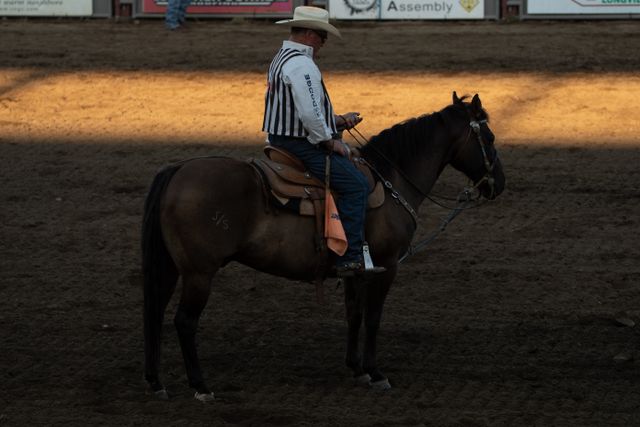
They may not like it, but no one feels like their actions are being judged when a rodeo judge or producer fines them for breaking the rules. The goal of the fine is to correct the behavior, like swearing in the arena for the crowd to hear when missing a catch or entering and not showing up.
The point of the fine isn’t to run a contestant off, but to encourage right behavior that helps the event run smoothly or to remain pleasing to the crowd in attendance.
A lot more is at stake for Christians and James says our correction can lead them to saving faith in Jesus with everlasting life in Heaven. It’s the blood Jesus shed on the cross that covers our “multitude of sins” but our correction is what God can use to lead someone to repentance and salvation.

by admin | May 28, 2026 | James
By Scott Hilgendorff / Cowboys of the Cross
Whether you’re breeding and training horses, raising cattle or competing in rodeo, at first look, it’s a lot of solitary work. But if you go out to the barn and you find your horse is lame or has a bad gash on his leg, you call a veterinarian for help. You get advice on supplements from the feed store and when it comes time to branding cattle, you have a whole team of help to work through the process.
In the roughstock side of rodeo, it’s you versus that bucking horse or bull, but you still need someone to open the gate when you nod your head.
There’s much in our lives that we go through alone, even when we have families, we sometimes keep struggles to ourselves. But James shows us the importance of community through prayer.
James 5: 13-18 Is anyone among you suffering? Let him pray. Is anyone cheerful? Let him sing praise. 14 Is anyone among you sick? Let him call for the elders of the church, and let them pray over him, anointing him with oil in the name of the Lord. 15 And the prayer of faith will save the one who is sick, and the Lord will raise him up. And if he has committed sins, he will be forgiven. 16 Therefore, confess your sins to one another and pray for one another, that you may be healed. The prayer of a righteous person has great power as it is working. 17 Elijah was a man with a nature like ours, and he prayed fervently that it might not rain, and for three years and six months it did not rain on the earth. 18 Then he prayed again, and heaven gave rain, and the earth bore its fruit.
These verses are sometimes used to suggest that with enough faith and prayer, healing is guaranteed but we know even from the first chapter of James, that the only thing we can count on in our broken and fallen world, is that we are going to face trials. Sometimes the healing we desire or the escape from our struggle doesn’t come or it doesn’t come easy.
We know that God will turn a trial into something good, but now, near the end of James, we also know we aren’t supposed to be the only person praying and we aren’t supposed to go through a trial alone.
And, we’re supposed share our joy with others, as James tells us to sing praise when God works in our lives, which shares that praise with everyone.
We’re in community together, good and bad.
When I’ve sinned, confessing it to others and praying together is going to strengthen our position against repeating that sin and we are going to draw on strength from others more mature than us as they pray for us. James isn’t specific if the healing he mentions is from physical illness and disease or a spiritual healing but he’s clear that there is power in our pray for others and being part of a community of believers.

by admin | May 13, 2026 | James
You go to buy a truck from a used card lot but when you get there, the mileage is higher than what you saw in their online advertisement and you can clearly see it’s leaking power steering fluid when the salesman told you there were no leaks before you drove an hour to the lot to drive it.
Maybe it still looks like a good deal, but the trust is gone. What else is wrong that you haven’t noticed yet?
What happens when you enter a rodeo knowing there’s $4,000 in added money but you get there, win the deal and get shorted because the gate money was bad that night and the producer cut the added money in half to make up his losses? The trust is gone and his next $4,000 event is the same night as a $1,000-added deal a half-hour further away with a producer who has always paid out what was offered. What about a finals that when you get there after competing all year has half the prizes and money they bragged would be up for grabs all season? There’s a reasonable chance you’re buying a card for another association the next year.
Integrity counts and James tells us we better take it seriously.
James 5: 12 Above all, my brothers and sisters, do not swear—not by heaven or by earth or by anything else. All you need to say is a simple “Yes” or “No.” Otherwise you will be condemned.
James appears to be reinforcing what Jesus himself taught about oaths in what we know as The Sermon on the Mount in Matthew.
Matthew 5:34-37 But I tell you, do not swear an oath at all: either by heaven, for it is God’s throne; 35 or by the earth, for it is his footstool; or by Jerusalem, for it is the city of the Great King. 36 And do not swear by your head, for you cannot make even one hair white or black. 37 All you need to say is simply ‘Yes’ or ‘No’; anything beyond this comes from the evil one.
James tells us that if we swear we will do something, we come under God’s judgment when we fail to do it and Jesus tells us that our dishonesty comes from Satan. It makes sense that James warns us then that God would condemn us for our dishonesty.
They both break it down very simply. Let your “yes” be “yes” and your “no” be “no.” We should be so trustworthy that our yes or no answer to someone is all we need. We shouldn’t need to swear an oath to add weight behind a promise we make. If we fail to live up to that promise, we’ve made it even worse.
Now, it’s important to remember grace in this situation. When we have a saving faith in Jesus, God no longer condemns us for our sin, but we’re also told in Romans 6:1-2 to not continue to sin so that there can receive more of God’s grace.
Sometimes we’re backed into a corner or something unforeseen has happened and we give in to the temptation to sin by not going through with what we said we would do or we simply are unable to do it. Yes, God’s grace and forgiveness covers us, but when our saving faith is real, there will be repentance. It can be a simple confession that we failed with a sincere apology for being dishonest or we can take steps to make things right.
All of those steps can help restore our integrity.
As Christians, we need to be trustworthy. We have the most important piece of knowledge an unsaved person can receive and that’s the Gospel; God’s plan for salvation and the difference between an eternity in Heaven or Hell. If we can’t be trusted, how can we convince someone that we’re speaking the truth about their salvation?

by admin | Apr 28, 2026 | James
By Scott Hilgendorff / Cowboys of the Cross
Have you ever lashed out unfairly at a family member or a friend? Maybe you’ve even taken your frustration out on a rodeo judge who you know really did make the right call or gave you the right score. When we’re under frustrated and feeling pressure from situations that are outside our control, we can sometimes let our guard down and get angry more easily.
James 5:7-11 is taking us near the end of James’s letter but some of what we learn at the very beginning of his book in the Bible comes back to play. He first wanted us to expect trials in our lives but to trust that God would let use them to help us grow in our faith. He also warns us to be more careful about listening harder and being slow to get angry.
Knowing many of the people reading his letter have faced hardship under the control the wealthy landowners have and struggle with being poor, he asks those struggling to remain patient and not turn against each other.
Instead, he asks them to be patient, again trusting in God to see them through their struggles.
James 5: 7-11 Be patient, therefore, brothers, until the coming of the Lord. See how the farmer waits for the precious fruit of the earth, being patient about it, until it receives the early and the late rains. 8 You also, be patient. Establish your hearts, for the coming of the Lord is at hand. 9 Do not grumble against one another, brothers, so that you may not be judged; behold, the Judge is standing at the door. 10 As an example of suffering and patience, brothers, take the prophets who spoke in the name of the Lord. 11 Behold, we consider those blessed who remained steadfast. You have heard of the steadfastness of Job, and you have seen the purpose of the Lord, how the Lord is compassionate and merciful.
He uses agricultural language we can still understand today about the importance of patience as we wait on God the way a farmer has to be patient as he waits for the rains to come at the right times to bring about the harvest.
If we lose our patience and grow angry with one another, he warns them that God, described as Judge, is not far away and they could face His judgment for their own actions against each other instead of waiting for Him to take care of the ones who have been abusing their power and creating the hardships.
Job from the Old Testament, who lost absolutely everything and suffered almost unbearably, saw everything eventually restored by God and James reminds those who are suffering of the importance of hanging on and waiting on God.
We don’t know why some find relief in suffering or from their trials and some do not, but we know that all who have a saving faith in Jesus receive a perfect life where there are no trials or suffering when we pass on from this one.
Cowboys of the Cross is a rodeo/bull riding ministry that leads cowboy church services at events and maintains an online presence to share the gospel and make disciples among the ranch and rodeo community. They can be found at CowboysOfTheCross.com
by admin | Apr 15, 2026 | James
By Scott Hilgendorff / Cowboys of the Cross
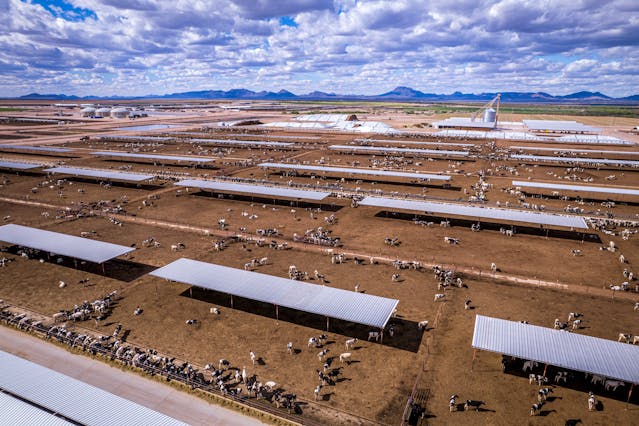
If you’re a large ranch-owner, could James be writing to you if he wrote his letter today? Originally written to the Jewish churches, James takes an often aggressive and harsh-sounding approach to encouraging us to live out what God’s word teaches us.
At the start of James 5, he turns his attention to wealthy landowners that were in control of a lot of Galilee, though his message would apply to all wealthy people, and he takes a strong tone against any who have misused the power their wealth has given them. He gives them a warning.
James 5:1-6 Come now, you rich, weep and howl for the miseries that are coming upon you. 2 Your riches have rotted and your garments are moth-eaten. 3 Your gold and silver have corroded, and their corrosion will be evidence against you and will eat your flesh like fire. You have laid up treasure in the last days. 4 Behold, the wages of the laborers who mowed your fields, which you kept back by fraud, are crying out against you, and the cries of the harvesters have reached the ears of the Lord of hosts. 5 You have lived on the earth in luxury and in self-indulgence. You have fattened your hearts in a day of slaughter. 6 You have condemned and murdered the righteous person. He does not resist you.
When James tells them to week and howl at what miseries are coming, he doesn’t mean an immediate justice for their abuses and actions that have led to defrauding or even the death of some of the poor. James is talking about the eternal consequences that living a wealthy life can lead us to if we abuse that wealth. A person with a saving faith in Jesus, who has repented of sin and been forgiven through the sacrifice on the cross that Jesus made in our place, isn’t going to live like this any more.
But for those who have chosen to continue living this way, abusing their power and taking advantage of the poor, it isn’t likely that they have found the forgiveness of a life in Christ because that life leads to change.
James is writing to those who continue to live their lives focused on themselves with strong language that they have fattened their hearts by living in luxury and face their own day of slaughter, referring to God’s judgment against them. He reminds them that God has heard their cries, meaning God is fully aware of any abuse or sinful living they have enjoyed but that there is a cost to that; without a saving faith in Jesus that moves us away from sin, we face God’s wrath and eternal separation from Him in hell.
It isn’t about having wealth that leads us to God’s judgment, it’s about using our power to our own advantage and not caring for those, like those who work for us.
Most of us our employees but some of us are the ones who employ others, whether it is farm hands and laborers on ranches and farms or the staff of a small or large business we own. Those who own the ranch are naturally going to have the most wealth. That’s okay. But how do you treat the people who work for you or that you trade horses with? James wants us to live a life that reflects Jesus in us, not one that reflects those without a saving faith that are greedily pursuing their own sinful desires.

Recent Comments