
A humble birth we should still be praising
By Scott Hilgendorff / Cowboys of the Cross
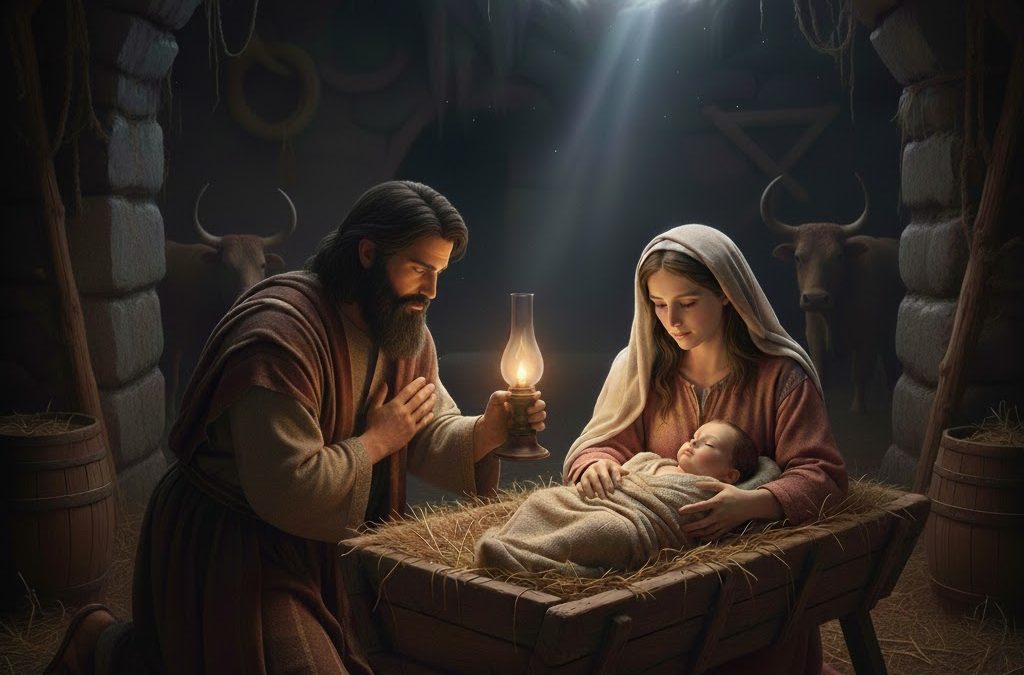
Chances are, Jesus wasn’t born in a stable. That doesn’t make his birth any less humble.
The idea of donkeys and cattle being gathered around is not as likely either.
Those ideas, while appealing to cattlemen, ranchers and cowboys, came along later and now, we grow up singing Christmas carols and songs that reference them and as kids, we grew up with television specials that depicted those kinds of images. Those images are everywhere from expensive pieces of art and home decor to jigsaw puzzles and Christmas cards. It’s understandable that we would make these assumptions when we consider the Christmas story.
I remember as a new believer, hungry to learn more from God’s word every day, that I was looking forward to adding reading what we call the Christmas story from Luke 2, into my Christmas traditions. Christmas morning, I opened my Bible and settled in to read through it. By verse seven, it was all but over in less than a minute of reading.
Luke 2:7 “And she gave birth to her firstborn son and wrapped him in swaddling cloths and laid him in a manger, because there was no place for them in the inn.”
There was no urgent knocking on doors in effort to find a place to stay as Mary was in labor. There was no description of the stable or animals gathered around. The story does continue with an angel of the Lord appearing before shepherds and of their journey to see the newborn Savior but there are very few details describing that manger scene we can all picture in our minds.
The manger, a feeding trough, is our clue that there likely were animals present and Jesus’s birth most certainly was still humble, but according to Steve Mathewson from an article with The Gospel Coalition. Most English translations of the Bible use the word inn but the Greek word being used is “katalyma” which, in two other places of the Bible, Mark, 14:14 and Luke 22:11, translate to “guest room.”
In that time period, historical understanding tells us there was often a downstairs room where animals might be kept for their heat and to keep them protected and it’s likely because there was no room in the guest room where they hoped to stay, Jesus was born in a downstairs family room where a feed trough, a manger, would still be present to feed the animals brought in there at night.
It just doesn’t leave room for donkeys and cattle.
It doesn’t mean we should stop singing, “Away in a Manger” and “The Little Drummer Boy;” it means we need to remind ourselves how careful we have to be with God’s word. It’s easy to let our culture influence how we interpret scripture when it’s scripture that needs to influence our culture.
As we think about the Lord’s humble birth and being placed in that manger, a powerful scene from our Christmas stories of an angel of the Lord appearing to a group of shepherds, an ancient version of modern cowboys, to tell them of Jesus’s arrival.
Then, even more stunning, in Luke 2:13, “Suddenly a great company of the heavenly host appeared with the angel, praising God…”
The shepherds went to see Jesus and from all their experiences, went home praising and glorifying God.
Whether or not Jesus was born in a stable, Jesus’s birth was still both humble and spectacular from the manger to the presence of countless angels before the shepherds.
These are details we know for certain from Scripture and are our inspiration to praise the arrival Jesus just the same as the shepherds this Christmas season, letting our celebration be one that praises God for what He did for us in sending a Savior to die for our sins. His death and resurrection gives eternal life to those repentant of their sins, seeking forgiveness through a saving faith in who Jesus was, born that day in a manger, and who he is now in Heaven.

Recent Comments